
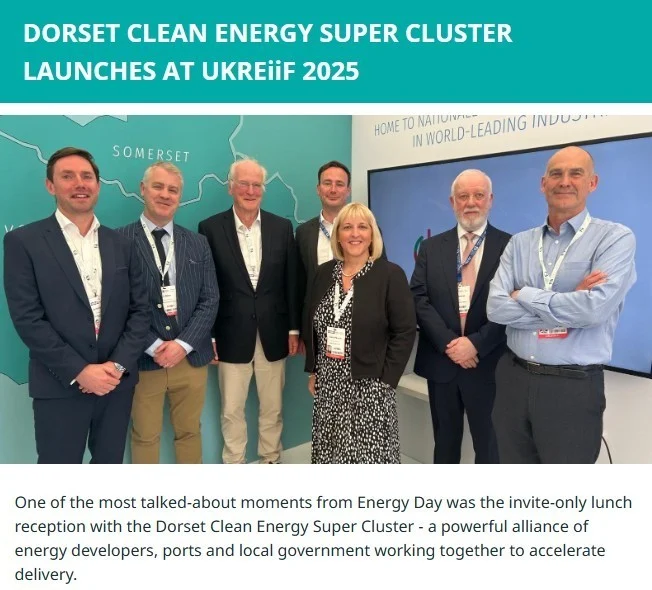
A year ago, the Dorset Clean Energy Super Cluster launched nationally at UKREiiF 2025, bringing together businesses, Dorset Council UK, regional and national stakeholders, including Tom Hayes MP for Bournemouth (East) and the Government’s Energy Mission Champion, to position Dorset as a leading UK destination for clean energy investment, jobs and skills.
Initiated by South West Business Council the Cluster was originally commissioned by Dorset Local Enterprise Partnership from September 2024, then facilitated by Dorset Council UK from April 2025. It is now co-funded by the public and private sectors. Strategic Director Claire Pearce reflects on the Cluster’s development, impact and key milestones.
Why Dorset, why now?
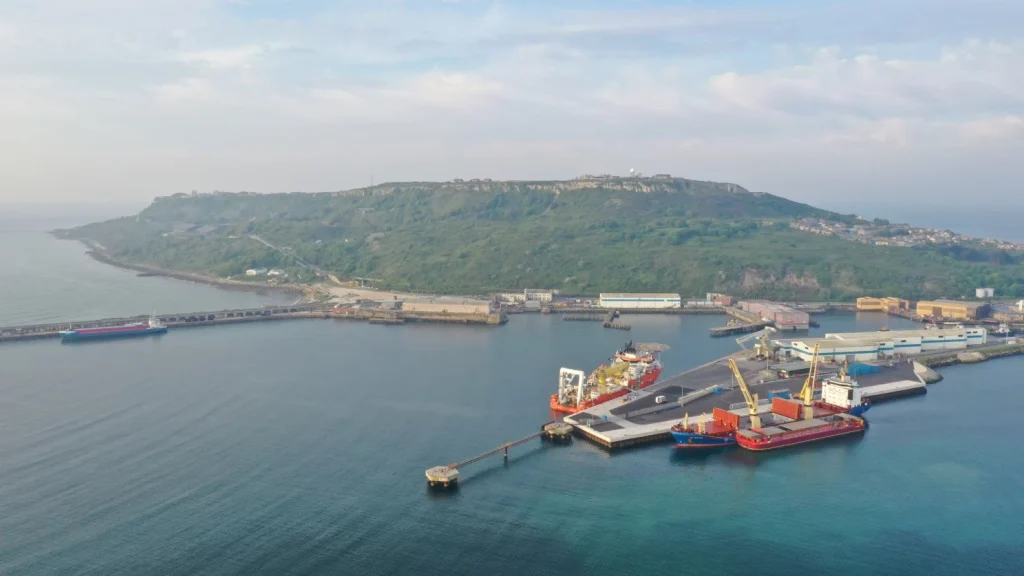
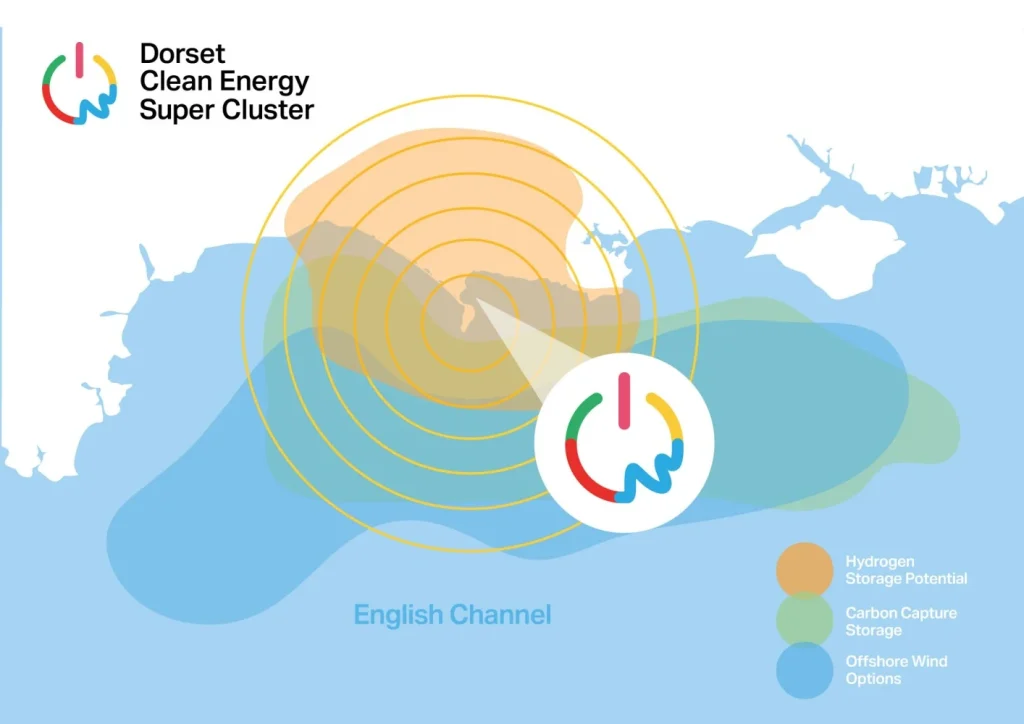
Dorset’s geography, geology and industrial heritage – centred on Portland’s sheltered, deep-water port – create unique conditions for a new era of clean energy infrastructure in the South of the UK: including deep fixed, offshore wind in the English Channel, port expansion to enable supply chain development, long duration hydrogen storage, subsea carbon capture and storage and potential new nuclear deployment.
Building on the Government’s national mission to make the UK a clean energy superpower, the DCESC is aligned to UK Modern Industrial Strategy and Dorset Council’s ambition to energise Dorset’s economy.
Our mission is clear: put Dorset on the UK clean energy map, unlock £28bn of investment, and build practical delivery pathways that strengthen energy security and national resilience.
Connecting communities to opportunities and strengthening economic wellbeing is a key planned outcome, alongside considered design to manage and mitigate environmental impacts. A well balanced approach will be required to ensure sustainable development that meets the needs of future generations.
[For more information on the Dorset Clean Energy Super Cluster’s group of nationally significant clean energy projects in the South of the UK – see end of article.]
Year one: impact and progress
The impact of the Cluster’s progress delivered in year one broadly fall into the following three themes: helping to shape the policy environment, building credibility with decision-makers, and moving priority projects towards invest-ability.
1. Influencing national, regional and local policy
- Port infrastructure as a national priority: the Offshore Wind Industrial Growth Plan (April 2024) identified ports as a key bottleneck—reinforcing the case for strategic capability on the South Coast.
- National recognition of Dorset’s hydrogen potential: referenced as a future hydrogen storage hub in Prime Ministers Qs (13 March 2025) see here.
- Offshore Wind Industry Council (OWIC) and The Crown Estate (TCE) Regional Growth Prospectus (RGP) for South Wales and South West:Portland Port is acknowledged as an integral part of the Celtic Sea Cluster for its potential as a manufacturing and construction port (May 2025)
- Alignment with the Government’s UK modern industrial strategy: the Clean Energy Industries Sector Plan(June 2025) highlights the role of Offshore Wind Regional Growth Prospectuses.
- National acknowledgement: the South West regional summary (October 2025) of the UK modern industrial strategy recognised the Cluster as an “identified priority to stimulate growth and investment.”
- Cluster inclusion in the Great South West priorities:multi-port strategy (April 25) and Investment and Energy Prospectus (May 25).
- Local delivery alignment: Dorset Council’s Cabinet approved a new Economic Growth Strategy (June 2025) which places clean energy projects at the heart of regional growth ambitions.
2. Raising the Cluster’s profile: engaging key stakeholders
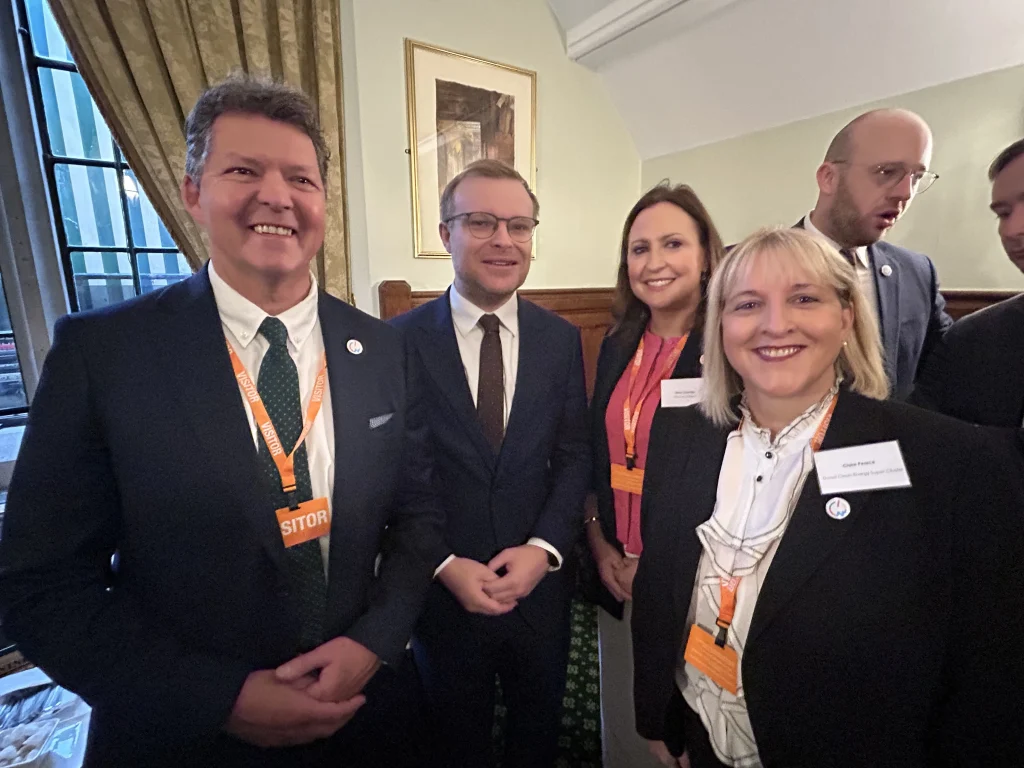
- Westminster Breakfast Briefing – with Dorset South MP Lloyd Hatton, attended by MPs and Energy Minister Michael Shanks, Dorset Council CEO Catherine Howe and Executive Director Jan Britton (November 2025) and cluster members. A milestone moment to get Dorset on the clean energy map at Ministerial level. Strengthening the case for Dorset as a place with real potential to support the Government’s mission for clean, home-grown energy.
- Engagement with national bodies – including the National Wealth Fund (September 2025), NESO (August 2025), Great British Energy (November 2025 ) and DESNZ (March 2026) through fact-finding missions held at Portland Port.
- South West and national business support – Led by the British Chambers of Commerce, the South West Business Council and regional business leaders responded to the Government’s ‘Build it in Britain’ letter to energy investors and developers (July 2025).
- Local government and community support – DCESC attended Dorset Council’s ‘Pathways to Prosperity’ events to present the clean energy transition and future potential proposed through its projects.
- Participating and connecting: in workshops, events to raise DCESC profile.
- Growing the Cluster’s voice: nearly 500 followers and 36,800 impressions in 12 months through communications on LinkedIn.
- Growing the Cluster’s membership and connections: Wales and West Utilities recently joined the Cluster (April 26) and our member UKEn has joined Hydrogen South West.
3. Demonstrating progress: moving projects towards investability
- Cluster founding members Morwind Secured Channel Gateway feasibility:Morwind secured £750,000 from The Crown Estate’s Supply Chain Accelerator Fund—50% of the £1.5m feasibility study (December 2025). A crucial step in making the project investment-ready.
- The Crown Estate Marine Delivery Routemap (March 2026) included the English Channel Area of Search as a “medium-term priority area” to 2050. A significant step for the Cluster and its future offshore wind projects.
- Local match-funding committed: Dorset Council confirmed a 25% contribution to match-fund £375,000 from the SCA award, with Morwind providing the remaining 25% (January 2026).
- Grid readiness: The National Energy System Operator (NESO) transitional regional energy plan (tRESP) identified the Chickerell grid supply point (South Dorset) area as a priority for proactive strategic investment (2028–2033). A vital future enabler for the Cluster’s ambitions: if new sources of energy are generated, they must be connected to the wider national grid.
- Hydrogen momentum: Cluster members UK Energy Storage (UKEn) signed an MOU with Wales & West Utilities and joined Hydrogen South West (April 26). Helping to put Dorset firmly on the future hydrogen map and demonstrating the county’s potential to a wider regional and national hydrogen ecosystem.
- Innovation and future jobs: Dorset Innovation Park (DIP) is open for business, with masterplanning underway at the additional Winfrith site to shape remediation and regeneration plans to re-purpose the site and stimulate future economic uses.
- Exploring Cross-sector links:Portland Port recently hosted a combined visit by Vice Admiral Andrew Burns CE OBE in his new role as Director of South West Business Council; followed by a familiarisation visit to DIP.
- Funding for academic collaboration secured: University of Bath led Supergen Energy Networks secures UKRI investment (May 26) for a Dorset energy systems study and hydrogen case study on the long duration store for the South West and Wales, drawing in expertise from across the country.
“Success can be achieved through a clear vision, enabled by close collaboration between our private-sector members, Dorset Council, Government and stakeholders. By working together, we can align policy, remove barriers and shape solutions to establish Dorset as a UK clean energy investment destination - boosting UK supply chains and driving economic wellbeing for future generations to come.”
Claire Pearce, Cluster Strategic Director
What’s next?...
- Maintaining momentum on invest-ability: advancing feasibility work to build use cases and strengthen the investor and delivery proposition for the Channel Gateway.
- Unlock offshore wind in the English Channel: working closely with The Crown Estate and stakeholders to reduce constraints and refine project development areas to accelerate a competitive leasing round in the English Channel at the earliest opportunity – essential if Government is to spread clean energy benefits to all parts of the UK.
- Collaborating with the academic sectorto produce impactful evidence to influence national policies and priorities to invest in energy systems, infrastructure and the hydrogen economy – specifically making the case for long duration hydrogen store in South Dorset to support the South/ South West of England and Wales, and connecting to the wider UK.
- Championing CCUS opportunities: continue to advocate for carbon capture, usage and storage as a major decarbonisation pathway for South Coast industry.
“The Cluster has made significant progress in getting Dorset on the clean energy investment map in its first year. We thank our members and partners for their continuing support as we focus on maintaining momentum.” Strategic Director, Dorset Clean Energy Super Cluster
End Notes
Dorset Clean Energy Super Cluster projects include:
- Port expansion at Portland enabling UK offshore wind supply chain development – establishing a strategic wind hub port – up to £750 million investment (Channel Gateway project led by Morwind Ltd)
- Offshore wind in the English Channel– A 2GW fixed offshore wind farm representing an investment of £15 billion, promoted by Source Energie.
- Hydrogen storage for South of UK– underground, modular salt cavern storage connected into national infrastructure (pipelines), hydrogen import and generation – £2 billion investment led by UKEn.
- Subsea carbon capture and storage (1 gigatonne capacity) in the English Channel – £2.5 billion investment, a transition opportunity for the current onshore oil and gas sector in Dorset and solution to decarbonise the wider Solent industrial cluster.
- Accelerated development of Dorset Innovation Park –an existing enterprise zone, to boost growth and bolster new defence and digital employment, with cross sectoral opportunities into clean energy.
- Potential new nuclear and/or hydrogen deployment at the Winfrith nuclear site –as an additional phase of Dorset Innovation Park.